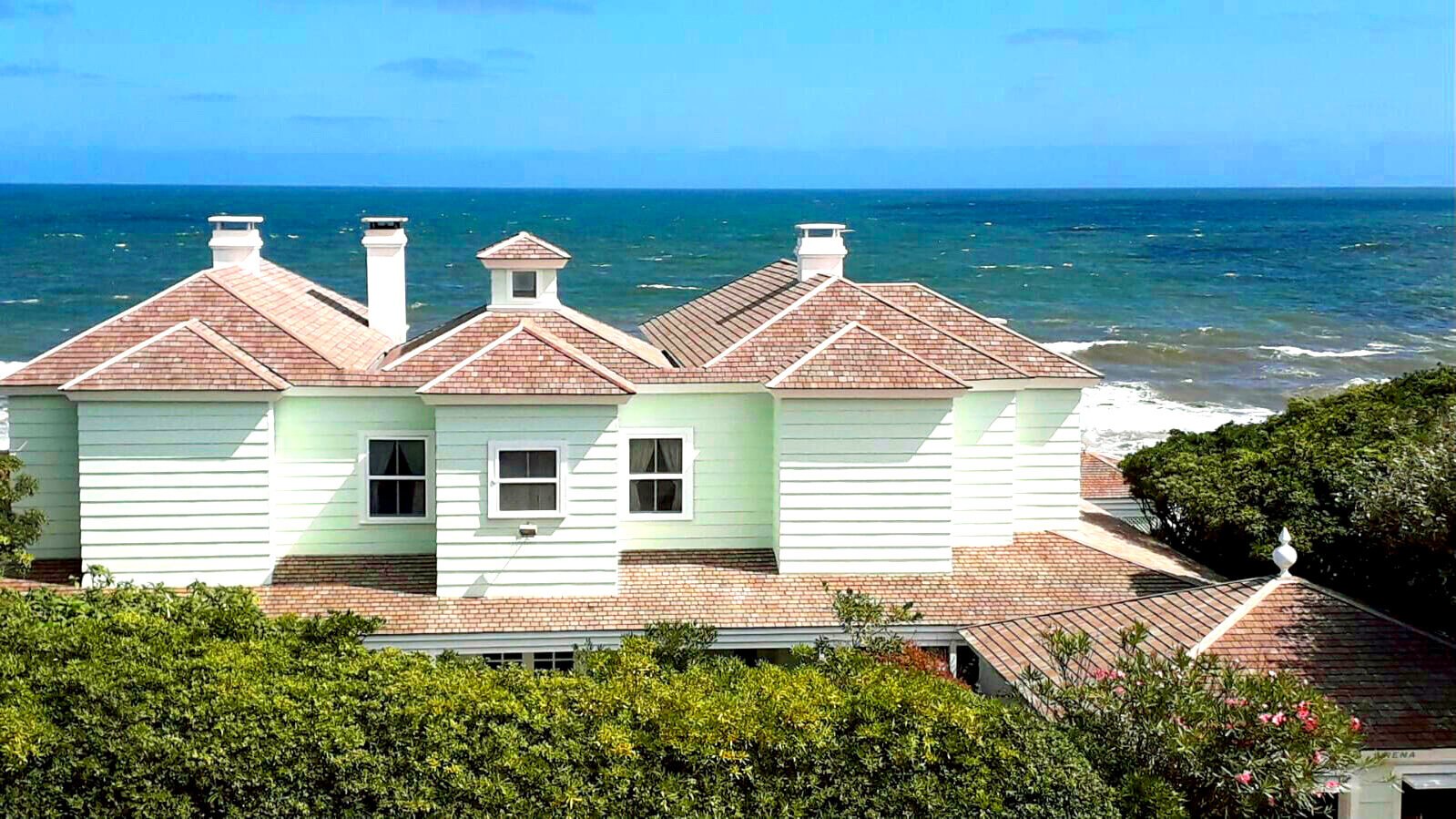
What are Wallaba shingles?
Wallaba shingles are roofing shingles milled from a dense tropical hardwood native to the forests of Guyana and northern South America. Unlike engineered or coated roofing products, a wallaba shingle is solid wood, quartersawn to resist cupping, and finished with nothing at all. Its performance comes from the tree, not from a treatment plant.
For a specifier, that distinction matters. There is no coating to fail, no chemical layer to leach or delaminate, and no maintenance schedule tied to a factory finish.
The wood species: Eperua
The species behind wallaba shingles is Eperua, a slow growing hardwood prized for its density and its high natural content of gum and oily resin. Those resins are the reason the wood performs the way it does.
- Extreme density and hardness give the shingle its structural stiffness and impact resistance.
- Natural gum and resin content resists rot, fungal decay, and wood boring insects with no pressure treatment or chemical preservative.
- The same oils that repel insects also help the wood shed water and stand up to constant salt air, which is why it suits coastal and island buildings so well.
Because the durability is intrinsic to the wood, a wallaba roof does not depend on a maintenance regimen to keep performing.
Performance and fire rating
- Fire. Wallaba carries a Class A flame spread rating, the highest classification for a roofing material and a meaningful factor in resorts, multifamily, and code sensitive projects.
- Density. The hardness of wallaba is many times that of common softwood shingles, which translates to better resistance to hail, wind driven debris, and foot traffic during service.
- Weathering. Installed shingles begin a rich reddish brown and weather naturally to a silver gray patina. That silvered surface also reflects UV and helps the roof assembly run cooler.
Lifespan
A properly installed wallaba roof has an expected service life beyond 50 years. This is a defining advantage for owners who intend to build once and hold the asset for decades, and it changes the lifecycle cost math considerably against materials that need replacement or refinishing every 20 to 30 years.
The cistern advantage for Caribbean projects
This is the point most specifiers miss, and it is often the deciding factor for island owners. Across much of the Caribbean, roof runoff is collected in cisterns and used for household drinking water. The roof is part of the potable water system.
A natural hardwood shingle sheds only water. It carries no plastic, no coating, and no synthetic surface layer into the cistern, unlike plastic composite shingle alternatives that can shed particulate over time. For a project where the roof feeds the drinking supply, wallaba is not just an aesthetic choice. It is a water quality decision.
A wallaba roof sheds rainwater, not plastic, which is why cistern fed Caribbean homes choose it.
Wallaba vs. cedar shingles
Both wallaba and cedar are natural wood shingle categories, and both are legitimate choices. The honest difference is density, maintenance, and service life. The figures below are representative of the two wood categories.
| Category | Wallaba | Cedar |
|---|---|---|
| Wood type | Dense tropical hardwood | Softwood |
| Relative hardness | Very high | Low |
| Fire rating | Class A | Typically Class B |
| Maintenance | No oiling required | Periodic oiling, roughly every 5 years |
| Rot and insect resistance | High, from natural oils | Moderate |
| Salt air performance | Excellent | Moderate |
| Typical service life | 50 years and beyond | About 30 years with upkeep |
Cedar remains a beautiful, workable material with a long track record. For a Caribbean coastal project where salt air, humidity, and low maintenance are priorities, wallaba is the more durable specification.
Applications
Wallaba is a premium material and is best specified where its performance and appearance are the point.
- High end residential and estate homes
- Resorts, hospitality, and clubhouse structures
- Architectural projects seeking a natural, low maintenance roof with a long service life
- Coastal and island builds exposed to constant salt air
Sourcing, grade, and documentation
Grade is the single biggest variable in a wallaba roof. Lower grade shingles carry more natural defects and can lead to leaks early in the roof's life, so the specification should call out a premium grade product with proper documentation.
NTC supplies Wallaba shingles. We supply full product documentation for the specification set and coordinate island delivery and logistics so the material arrives on site correctly and on schedule. Some architects hold direct relationships with mills, and that is a valid path. Where NTC adds value is as a supply option that handles documentation and Caribbean delivery for you, so the specification is backed by paperwork and the logistics are managed.
Maintenance and weathering
- No oiling, sealing, or chemical retreatment is required over the life of the roof.
- The color shift from red brown to silver gray is natural weathering, not degradation, and can be expected within the first several months of exposure.
- Routine care is limited to keeping the roof clear of debris and confirming flashing and fasteners during normal inspections.